Physicians and the Traditional Black Uniform
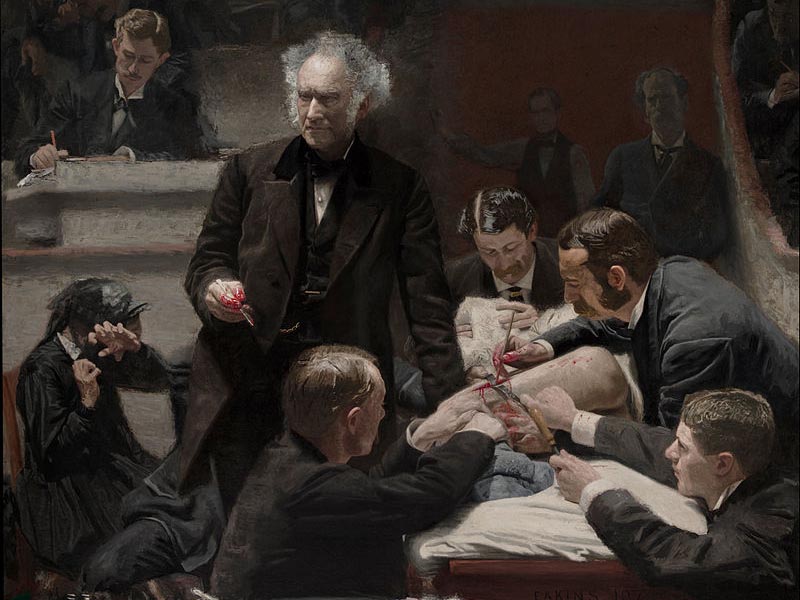
Historically, physicians adhered to a distinct dress code whilst practising medicine. Throughout the 18th and early 19th centuries, doctors typically wore formal black attire. A notable historical record of this practice can be seen in Thomas Eakins' renowned 1875 painting, The Gross Clinic, depicting a surgical procedure at Jefferson Medical College in Philadelphia, where the lead surgeon and his assistants are dressed in dark frock coats. The preference for black attire during this era was driven primarily by two factors:
- A symbol of formality and gravity: Illness was often fatal, and medical interventions carried considerable risk. Black reflected sombre solemnity, formality, and the grave responsibility of caring for patients.
- A mark of respect and mourning: Before the advent of modern therapeutics, patients rarely sought medical attention until they were critically ill, leading to high mortality rates. Wearing black conveyed a state of preparedness for mourning whilst paying solemn respect to the terminally ill.

The Laboratory Origins of the White Coat
The long white coat was initially conceived for laboratory scientists and researchers. Its purpose was to protect the wearer's skin from direct exposure to hazardous chemicals and to prevent personal clothing fibres from contaminating sensitive experiments. Opting for white fabric ensured that any chemical spills, particulates, or contaminants were immediately visible, prompting swift cleaning or replacement.

The Transition to the White Clinical Coat
Towards the end of the 19th century, European medicine advanced significantly with the emergence of germ theory and microbiological science. The establishment of antiseptic techniques revolutionised clinical standards, making strict hygiene a paramount priority in healthcare facilities. Consequently, the white coat replaced black clothing as a visual testament to cleanliness, antisepsis, and patient safety.
From a psychological standpoint, the shift towards white apparel also transformed the patient experience. The bright, pristine appearance of the garment helped alleviate dread, fostered a reassuring atmosphere, and symbolised the restoration of health.

Modern Standards for Medical Coats
Today, medical coats are engineered to support the operational requirements of various clinical specialities. Modern designs generally fall into three key categories:
- Short Lab Coat: Featuring a hip-length cut, this style prioritises ease of movement and agility. It is widely favoured by general practitioners, outpatient clinicians, dentists, and pharmacists.
- Long Lab Coat: Designed to reach the knee, this cut provides full-coverage protection against bodily fluids, pathogens, and chemical reagents. It is standard attire across inpatient wards, surgical units, and pathology laboratories.
- Doctor Coat Suit (Tailored Consultation Coat): Constructed with structured tailoring reminiscent of a formal blazer, this cut conveys institutional authority and expertise. It is often worn by medical directors, department heads, and academic consultants.
In practical hospital environments, selecting the right textile is paramount. Medical-grade fabrics must offer superior breathability, wrinkle recovery, and dimensional stability, whilst withstanding repeated commercial laundering cycles and high-temperature thermal disinfection.
 Chat on LINE







 Sign in with Google
 Sign in with Facebook
 Sign in with LINE