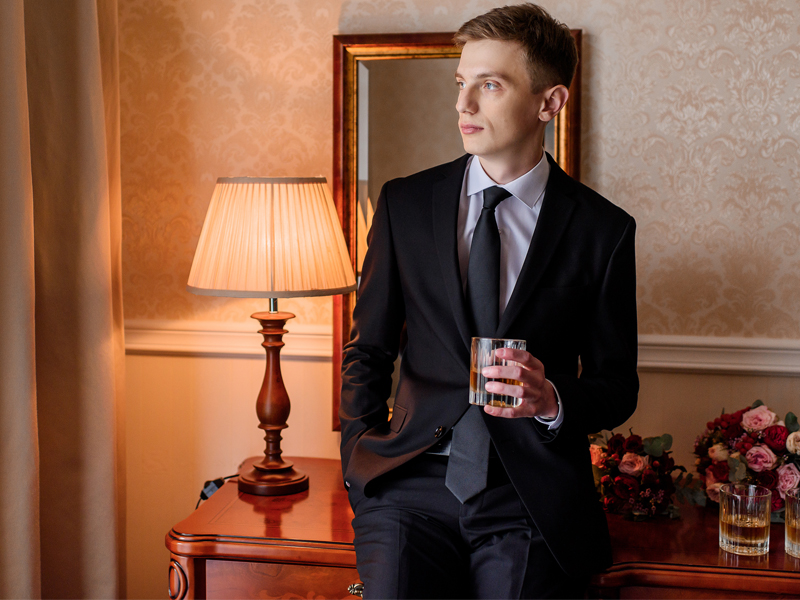
1. Single-Breasted Suit
A suit is a universal sartorial standard that plays a vital role in projecting a polished, professional image. Each suit style is structured to suit different levels of formality and body silhouettes, with the single-breasted suit serving as the foundational, most versatile cut.
A single-breasted suit is defined by a single row of buttons down the front, typically featuring one to three buttons, with overlapping fabric just wide enough to fasten. This design offers exceptional versatility, transitioning effortlessly from formal ceremonies and business engagements to smart-casual gatherings. When paired with matching trousers in the same fabric and colour, it delivers a clean, cohesive, and sophisticated look.

2. Double-Breasted Suit
The double-breasted suit is characterised by its generous front overlap and two parallel columns of buttons, usually featuring four or six buttons (with only one or two functioning anchor fastenings). It is almost universally paired with peak lapels to accentuate the width of the chest and shoulders, creating a commanding silhouette.
In classical tailoring, a double-breasted suit carries a higher level of formality. It is traditionally favoured for ceremonial occasions, formal receptions, and executive boardroom settings. Because of its tailored wrap structure, the jacket is designed to remain buttoned while standing to preserve its crisp lines and shape.

3. Tuxedo (Dinner Suit)
The tuxedo (or dinner suit in British sartorial tradition) is the standard formal evening wear designated for black-tie dress codes. It stands distinct from business suiting through signature satin or grosgrain facing on the lapels—either a shawl collar or peak lapel—as well as fabric-covered buttons and matching braids down the trouser outseams.
Traditional black-tie etiquette calls for pairing the dinner suit with a crisp white formal dress shirt, a black silk bow tie, a cummerbund or evening waistcoat, and high-shine patent leather or polished dress shoes.

4. Business Suit
A business suit is engineered for everyday professional workplace environments, placing emphasis on ease of movement, durability, and understated elegance. The standard cut is predominantly a single-breasted, two-button jacket with classic notch lapels, offering a flattering drape across diverse body types.
The benchmark palette for corporate suiting centres on navy and charcoal grey, colours widely recognised for exuding authority and professionalism. Trousers are tailored from the same bolt of fabric as the jacket, worn alongside a crisp dress shirt and silk necktie.

5. Casual Suit
The casual suit evolved to soften formal rigidity, stripping back traditional internal tailoring elements. Unconstructed tailoring—featuring deconstructed chest canvases and soft or absent shoulder pads—delivers a lightweight, relaxed feel with effortless comfort and mobility.
These suits typically utilise textured natural fabrics such as linen, cotton, or lightweight wool blends. A casual suit offers immense styling flexibility, pairing naturally with crew-neck T-shirts, polo shirts, or mandarin-collar shirts without the need for a necktie.
How to Choose the Right Suit for Every Occasion
Guidelines for Selecting a Suit by Dress Code
Selecting a suit aligned with the event's dress code and atmosphere is a cornerstone of classic dressing etiquette. Key considerations include:
- Job Interviews and Business Meetings: Best suited to a single-breasted business suit in classic navy or charcoal grey, paired with a crisp white or light blue shirt and an understated tie to convey trust and professionalism.
- Weddings and Formal Galas: Adhere to a tuxedo (dinner suit) whenever Black Tie is specified. For conventional weddings or semi-formal gatherings, double-breasted or single-breasted suits in shades attuned to the setting work well—such as lighter hues for outdoor daytime ceremonies and darker tones for evening banquets.
- Corporate Uniform Suiting: Single-breasted styles crafted from durable, crease-resistant, and low-maintenance fabrics are ideal for daily corporate wear. Organisations can utilise custom suit tailoring services to achieve tailored patterns that flatter a diverse range of staff body profiles.
The Paramount Importance of Fit
Beyond cut and colour, fit is the defining hallmark of exceptional tailoring. Jacket shoulder seams must sit flush with the natural edge of the shoulders; jacket sleeves should leave roughly half an inch of shirt cuff visible; and trouser hem length should match the leg width to create a clean break without unsightly fabric pooling when standing upright.
Frequently Asked Questions
What is the difference between a single-breasted and a double-breasted suit?
A single-breasted suit features a single central row of buttons, offering a streamlined, versatile look suitable across multiple levels of formality. A double-breasted suit features overlapping front panels with parallel rows of buttons, creating a bolder, more structured chest and shoulder line that traditionally commands higher formality.
What are the essential rules for buttoning a suit jacket?
For a two-button jacket, always button the top button and leave the bottom unbuttoned. For a three-button jacket, follow the classic rule: "sometimes, always, never" (top button optional, middle button fastened, bottom button never fastened). Always unfasten your jacket when seated to prevent pulling and preserve the garment's structure.
Should I buy an off-the-rack suit or invest in tailor-made suiting?
Off-the-rack (ready-to-wear) suits suit urgent timelines and standard body measurements. In contrast, bespoke or made-to-measure tailoring accommodates natural posture and physical asymmetries, while offering complete control over fabric selection, canvassing, lapel styling, and pocket details tailored to your exact needs.
 Chat on LINE





 Sign in with Google
 Sign in with Facebook
 Sign in with LINE